Intro
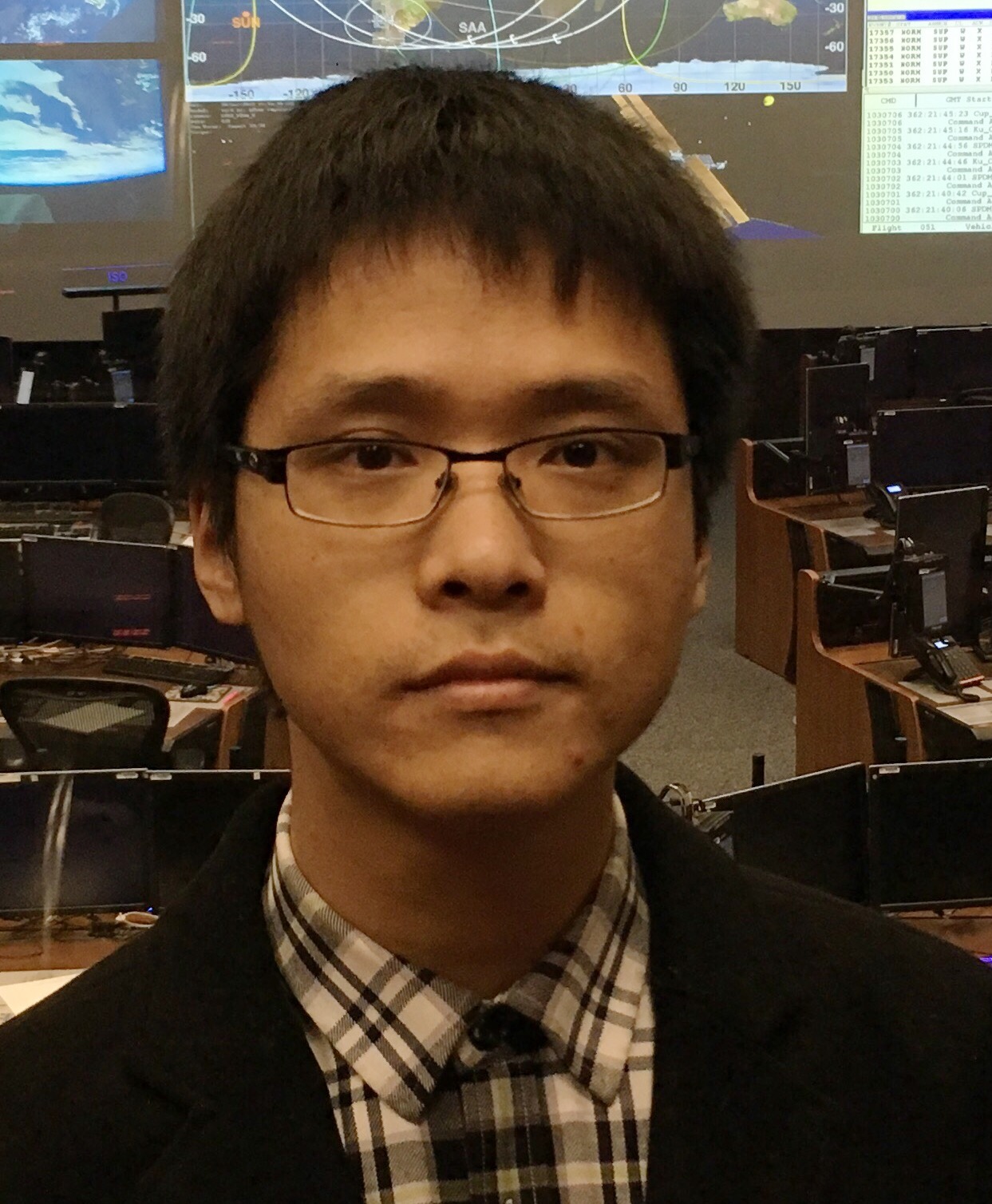
Welcome! I am a new faculty member in the Institute of Astronomy at
Zhejiang University and a 百人计划研究员. My research explores galaxy evolution
and feedback processes across cosmic time, leveraging multi-scale, multi-redshift, and multi-wavelength observations. With extensive experience leading observational programs, securing competitive funding (including PI programs from
the
Hubble Space Telescope and
James Webb Space Telescope), and collaborating with theorists, I am excited to contribute to various aspects of galaxy evolution research.
Previously, I was a CIERA Fellow at
Northwestern University's Center for Interdisciplinary Exploration and Research in Astrophysics (CIERA) and a postdoctoral researcher at
Johns Hopkins University (2020–2023), advised by
Prof. Timothy Heckman and
Dr. Alaina Henry. During that time, I participated in several large collaborations, including the
COS Legacy Archive Spectroscopic SurveY and the Low-redshift Lyman Continuum Survey. CLASSY constructs the first high-quality, high-resolution far-ultra violet spectral database of nearby star-forming galaxies and I led the studies of galactic outflows in these galaxies. LzLCS builds the first large sample of galaxies with direct detections of Lyman continuum (LyC) at low-redshift, where I focused on studying the properties of Mg II lines and their correlations to LyC photon escape.
I earned my Ph.D. in astrophysics from
Virginia Tech, where I studied quasar outflows under the guidance of
Prof. Nahum Arav. Alongside my astrophysics research, I pursued an M.S. in computer science at VT, which has significantly enhanced my efficiency in data analysis for modern astrophysics.
To date, I have authored over 70 journal publications with more than 3,300 citations.
Students interested in galaxy evolution, feedback, galactic winds, cosmic reionization, or the escape of ionizing radiation are welcome to contact me. I’m always happy to connect and discuss science, research, or life in general. Feel free to reach out to me.
Research Highlight
These highlights trace my work on how energetic feedback shapes galaxies, from quasar winds to starburst-driven outflows and the escape of ionizing radiation.
7. Resolving the spatial structure of galactic winds from unresolved spectra.
Galactic WindsHST/COSMultiphase FeedbackWind Modeling
Question: Can spatially integrated spectra reveal the radial structure of galactic winds that cannot be directly resolved?
Approach: We combine high-quality HST/COS ultraviolet observations with a state-of-the-art multiphase wind model to recover the radial structure of galactic outflows and constrain both the cool outflowing clouds and the otherwise difficult-to-observe hot wind.
Takeaway: Integrated UV absorption profiles encode strong information about the spatial evolution of galactic winds, opening a new avenue for studying multiphase feedback in large galaxy samples.
For more details, see Xu et al. 2026.
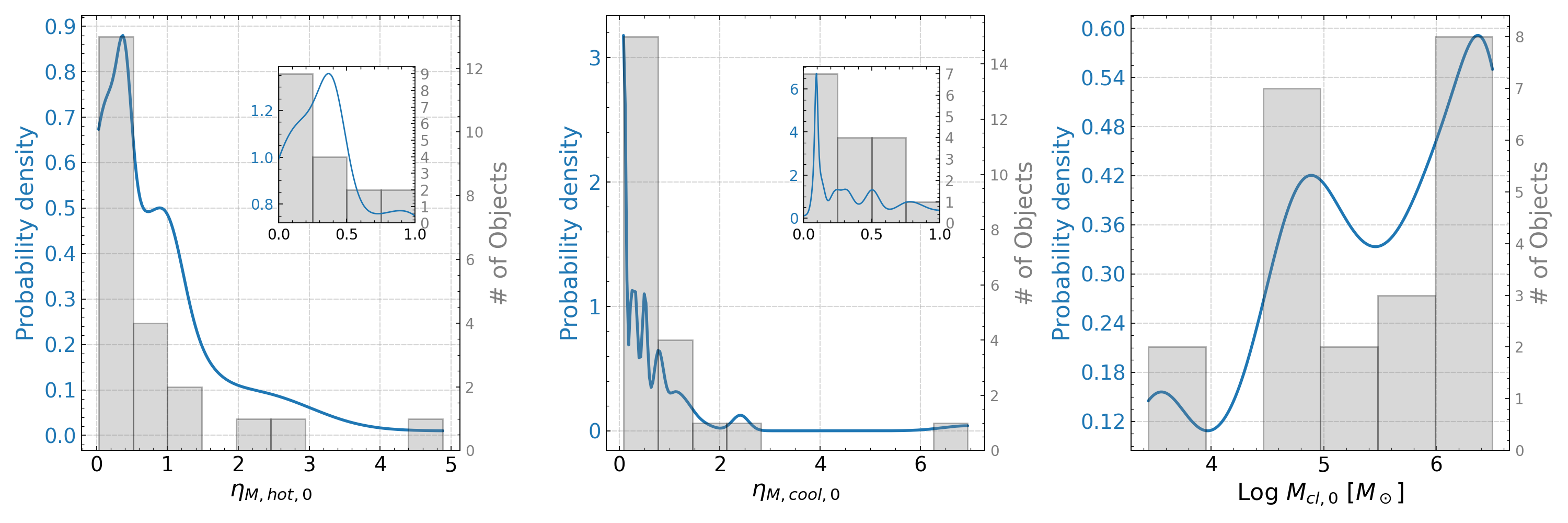
The figure shows the distributions of the best-fit wind-model parameters for galaxies in our sample. From left to right, the x-axes are the hot-wind mass-loading parameter (\(\eta_{M,hot,0}\)), the cool-cloud mass-loading parameter (\(\eta_{M,cool,0}\)), and the initial cloud mass (\(\log M_{cl,0}\,[M_\odot]\)). Blue curves show the probability density functions for the fitted parameters, gray histograms show the number of objects, and the insets zoom into the 0-1 range with finer binning.
6. Spatially resolving the fundamental elements of cosmic reionization in galaxies.
Cosmic ReionizationLyC EscapeHWOUV IFU
Question: What physical pathways allow ionizing radiation from young star-forming galaxies to escape into the intergalactic medium?
Approach: We propose a science case for a next-generation UV integral-field spectrograph on the Habitable Worlds Observatory (HWO) capable of resolving individual Lyman continuum (LyC) emitting star clusters and their surrounding interstellar medium on 10-100 pc scales.
Takeaway: Such observations would directly measure where ionizing photons escape, reveal how stellar feedback shapes the surrounding gas, and establish the physical framework linking nearby galaxies to those that reionized the early Universe.
For more details, see Xu et al. 2026.
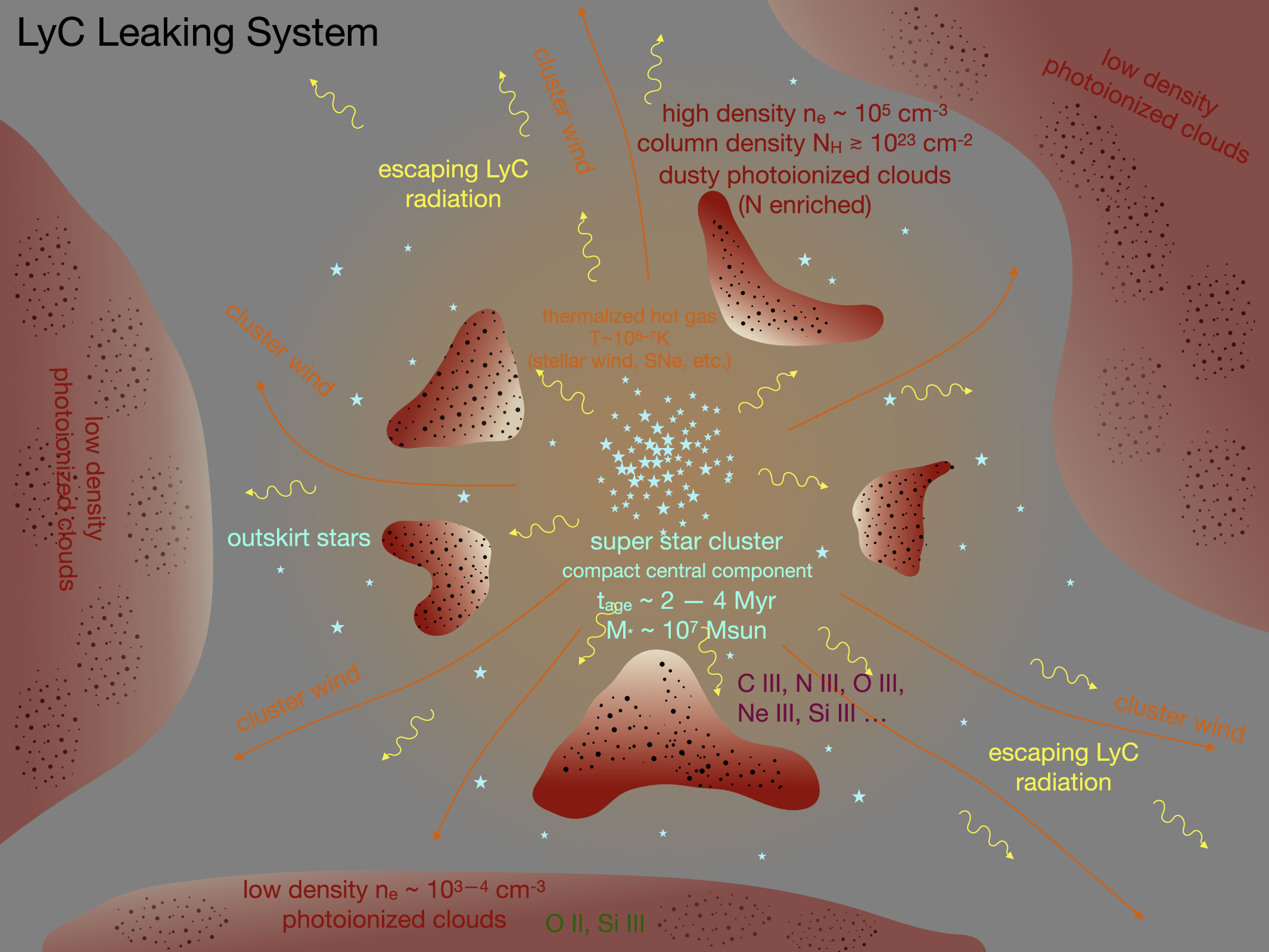
Figure adapted from Pascale et al. 2023.
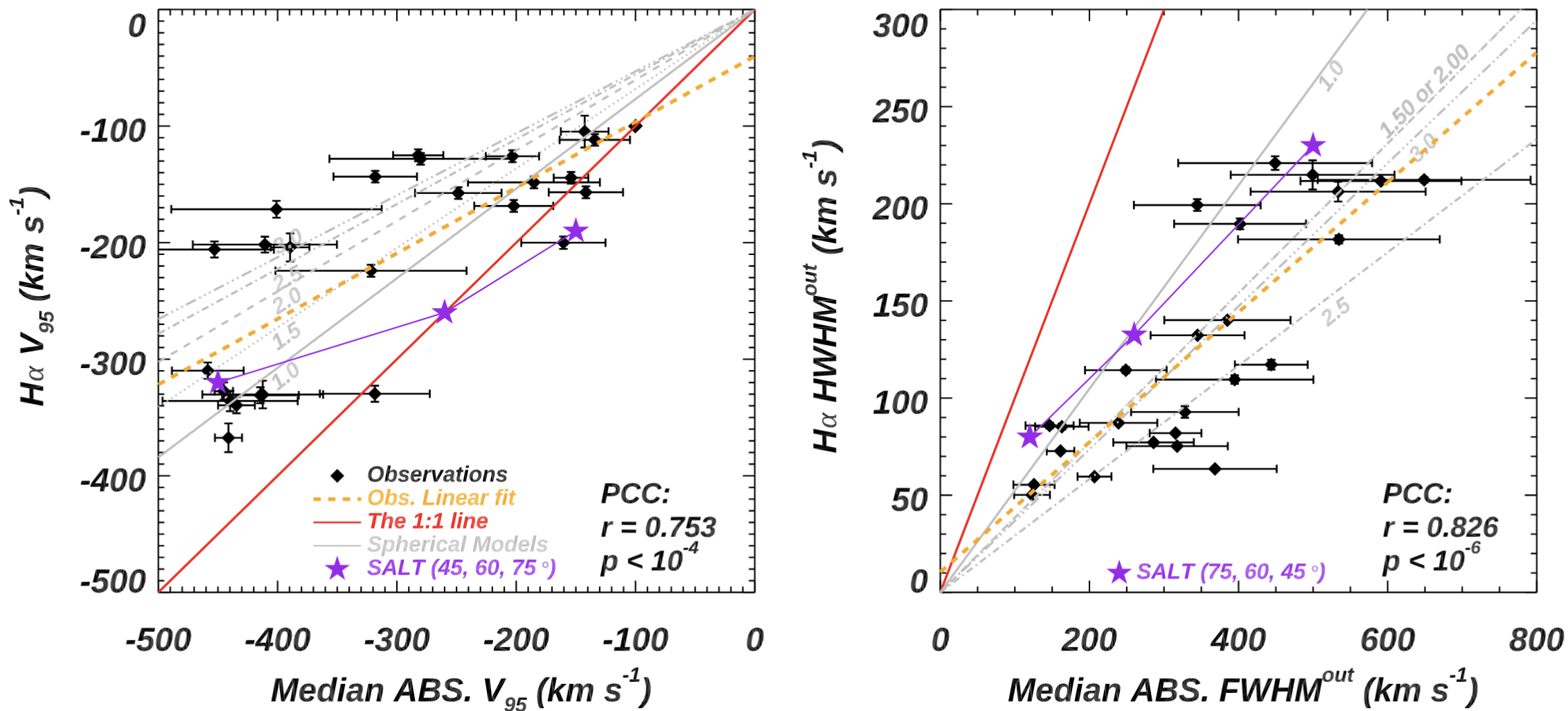
5. Correlations between outflow kinematics derived from absorption and emission lines within individual galaxies.
Galactic WindsEmission LinesAbsorption LinesFeedback Diagnostics
Question: Do outflow diagnostics measured from H\(\alpha\) emission and UV absorption lines trace the same underlying gas within individual galaxies?
Approach: We compared the maximum outflow velocity (\( v_{95} \)) and the blue-shifted line width measured from H\(\alpha\) and UV absorption lines. Our sample galaxies are shown in black, while models are represented in gray and purple.
Takeaway: Both panels reveal strong correlations with some scatter. The models suggest that both outflow diagnostics share a consistent outflow density distribution.
For more details, see Xu et al. 2025.
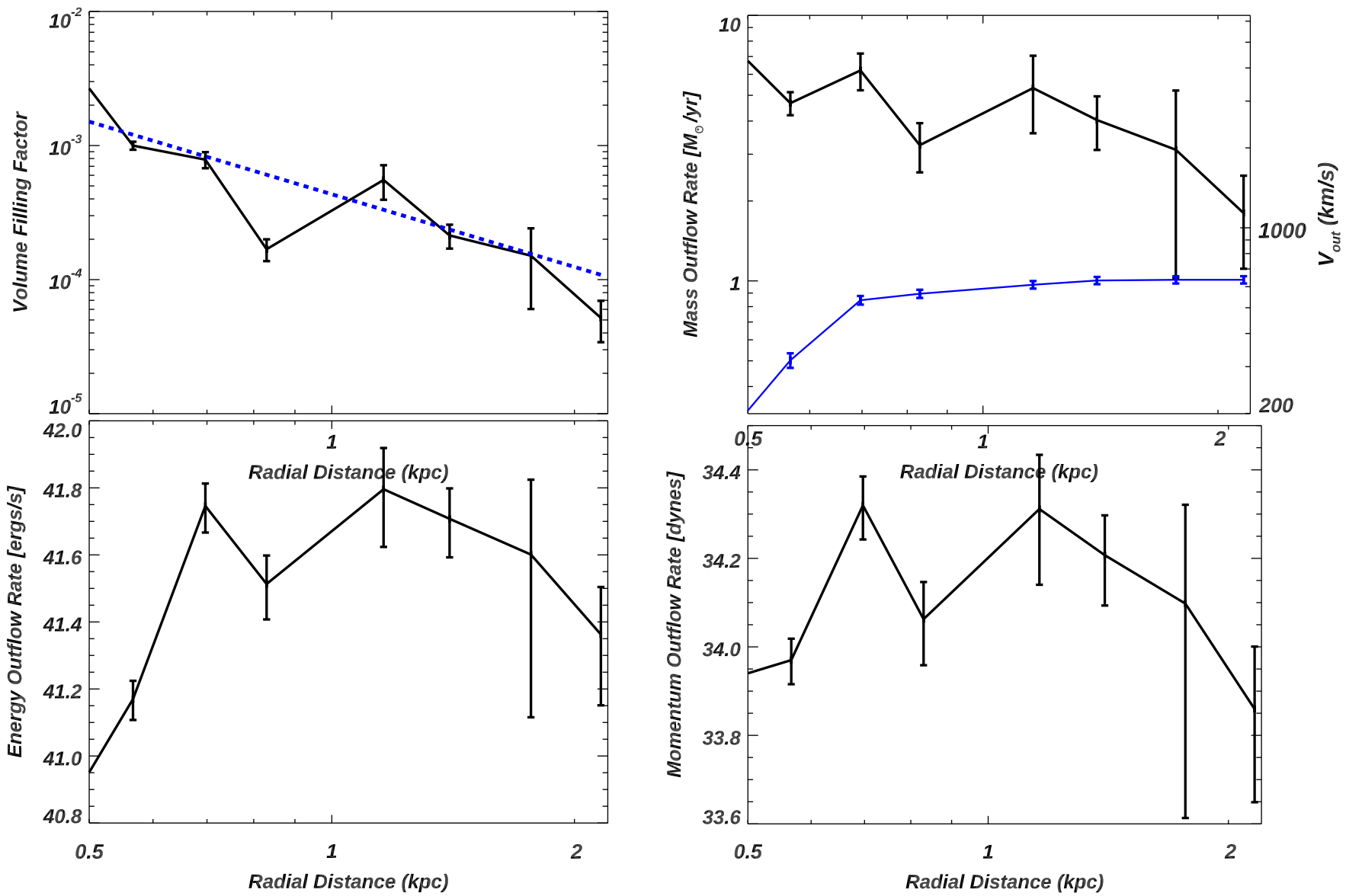
4. Radial distribution of outflow properties in the starburst galaxy M 82.
M 82Starburst GalaxyCGMMass Outflow Rate
Question: Can starburst-driven outflows transport mass, energy, and momentum from the galaxy to CGM scales?
Approach: We measured how the outflow properties vary with radius in M 82. The panels (from top left to bottom right) show the radial distributions of the volume filling factor, mass outflow rate (\(\dot{M}\)), outflow velocity (\(V_{out}\)), energy outflow rate (\(\dot{E}\)), and momentum outflow rate (\(\dot{P}\)).
Takeaway: A key finding is that the outflow rates do not decline rapidly with increasing radius, indicating that the outflows in M 82 can transport significant mass, energy, and momentum to circumgalactic medium (CGM) scales.
For more details, see Xu et al. 2023.
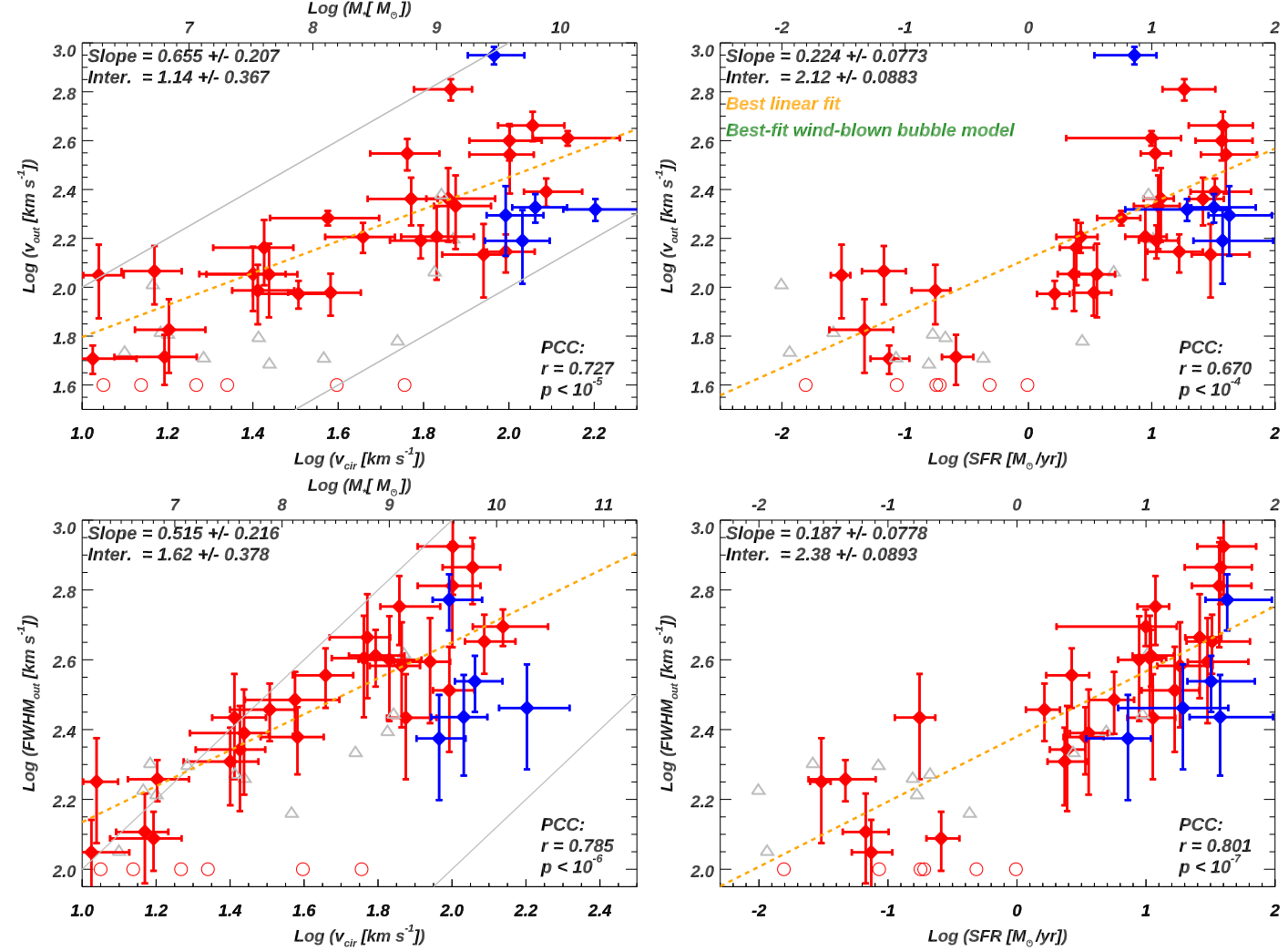
3. Strong correlation between SN-driven galactic outflow properties and host galaxy characteristics.
CLASSYSupernova FeedbackGalaxy Scaling RelationsOutflow Kinematics
Question: How are the properties of supernova-driven galactic outflows connected to the galaxies that launch them?
Approach: We compared the outflow velocity (\( V_{out} \)) and the full width at half maximum (\( FWHM_{out} \)) of galactic outflows with host galaxy properties, including stellar mass (or circular velocity) and star formation rate. The red points represent galaxies from the CLASSY sample, while the blue points correspond to those from Heckman et al. (2015).
Takeaway: We present evidence that the properties of supernova-driven outflows are closely linked to their host galaxies.
For more details, see Xu et al. 2022a.
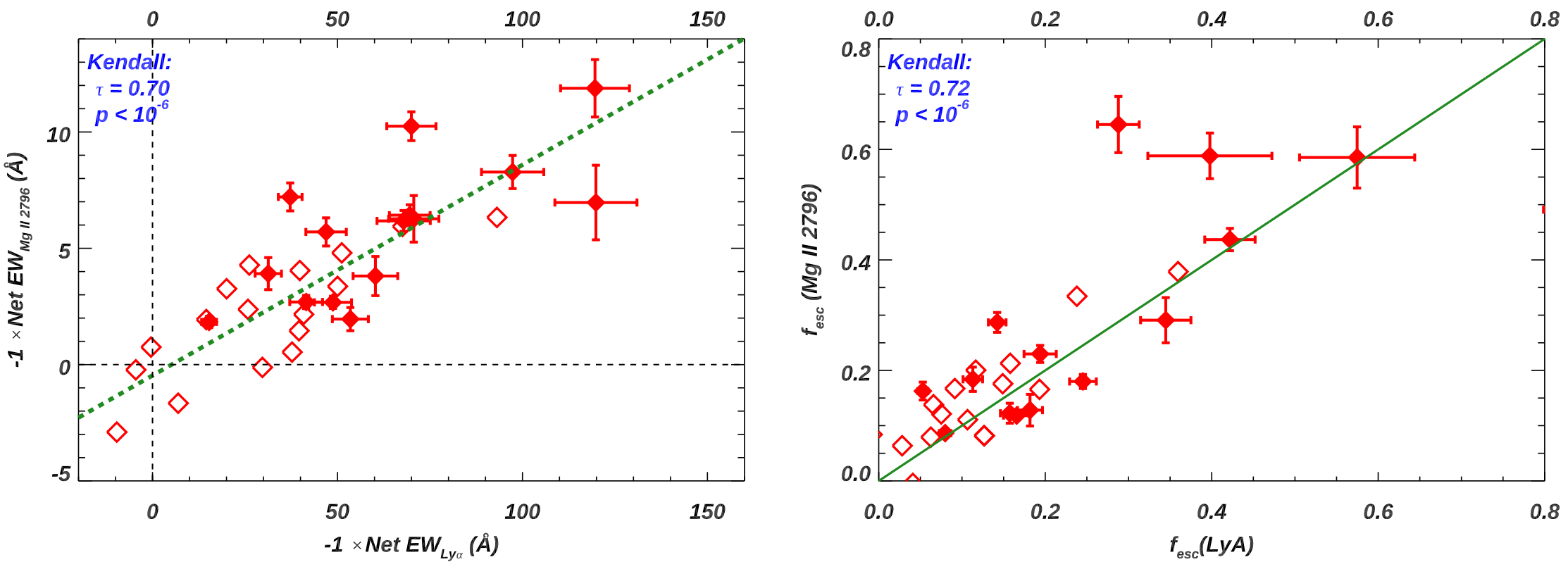
2. Correlations between Mg II and Lyα properties in galaxies from the Low-redshift Lyman Continuum Survey (LzLCS).
LzLCSMg IILyαLyC Escape
Question: Can Mg II help trace the escape of Ly\(\alpha\) and Lyman continuum (LyC) photons from star-forming galaxies?
Approach: We compared Mg II and Ly\(\alpha\) properties in galaxies from the Low-redshift Lyman Continuum Survey (LzLCS). The left panel compares the net equivalent widths of Mg II and Ly\(\alpha\), while the right panel compares their escape fractions. Galaxies with Mg II in emission are shown as solid symbols, while those with non-emission features (e.g., P-Cygni profiles or absorption) are represented as open symbols.
Takeaway: In both cases, we observe a strong correlation, consistent with the resonant scattering nature of Mg II and Ly\(\alpha\) lines. These findings indicate that Mg II can serve as a valuable tracer of ionizing photon escape in galaxies that leak Ly\(\alpha\) and Lyman continuum (LyC) radiation.
For more details, see Xu et al. 2023b.
1. Acceleration of quasar outflows observed in SDSS J1042+1646.
Quasar OutflowsHST/COSBAL AccelerationAGN Feedback
Question: Can quasar broad absorption line (BAL) outflows show measurable acceleration over human timescales?
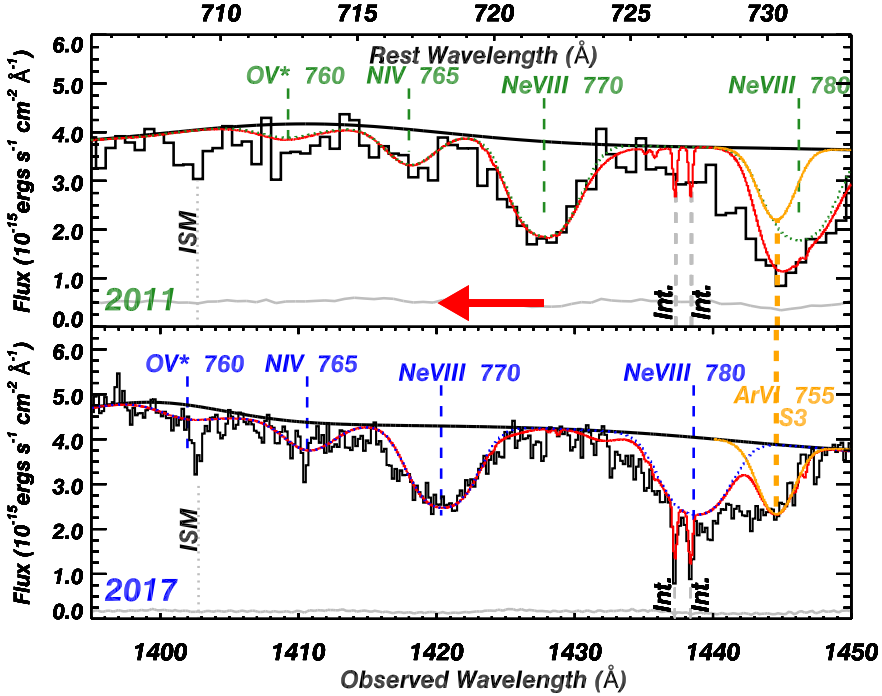
Approach: We used the Hubble Space Telescope/Cosmic Origin Spectrograph to observe quasar outflows in SDSS J1042+1646. The top and bottom panels show observations from the 2011 and 2017 epochs, respectively. The data are displayed as black histograms with error bars in gray. Gaussian fits for the strong ionic absorption troughs are shown in green and blue, while the sum of the model fits is represented in red. Prominent Galactic ISM absorption lines are marked in orange.
Takeaway: Comparison of the two epochs reveals an average acceleration of 480 km s\(^{-1}\) yr\(^{-1}\) (1.52 cm s\(^{-2}\)) in the quasar's rest frame—the largest broad absorption line (BAL) acceleration recorded at that time!
For more details, see Xu et al. 2020b.